

Birthing Our Essence
Somatic Birth Integration Workshops
Also known as Womb Surrounds
A Three to Five Day Journey of Birthing Our Essential Nature
These immersive workshops offer a deeply held space to gently explore and integrate our earliest imprints, reconnect with the inherent wholeness present from the very beginning, and cultivate greater freedom beyond the survival patterns that once served us.
Drawing from the field of Pre- and Perinatal Somatic Psychology, we explore the lived experience of human development from before conception through life in the womb, birth, and early infancy. Through embodied awareness, relational presence, and compassionate inquiry, we listen to the stories held within the nervous system, opening the possibility for healing, integration, and a more authentic expression of who we are.

New Dates
We are pleased to offer new dates for our Womb Surround / Somatic Birth Process Workshops, intimate experiential gatherings exploring our earliest developmental and relational experiences.
Each group is limited to 3–8 participants to support a personal, connected, and held experience.
Upcoming Dates
October 2–4, 2026
Friday 4:30 PM – Sunday evening
December 11–13, 2026
Friday 4:30 PM – Sunday evening
January 20–24, 2027
Wednesday 9:00 AM – Sunday evening
Five-day intensive
More dates coming soon.
Workshop Format
The three-day Womb Surrounds begin Friday at 4:30 PM and conclude Sunday evening. These are full days, with Friday and Saturday sessions sometimes continuing into the evening. Please give yourself plenty of space around these weekend workshops so you can be fully present for the experience.
The five-day intensive runs Wednesday through Sunday, with full-day sessions beginning at 9:00 AM and continuing through Sunday evening.
Group size:
Three-day Womb Surrounds: 3–4 participants
Five-day January intensive: maximum 8 participants
Email us your questions and we’ll respond within 2-3 business days.
The Work We Do:
Growing Consciousness and Agency
This work recognizes that our journey as embodied consciousness begins before physical birth. Ancient wisdom traditions, particularly Sanatan Dharma, have long held that consciousness precedes conception, that the soul carries intentions into embodiment, and that our earliest experiences shape how we meet life.
Our experiences from conception through birth and into early childhood live within us as implicit memory patterns, some as imprints and double binds: impossible situations where we had to choose between equally essential needs.
Examples of early double binds:
A baby whose cord is wrapped around their neck must choose between pushing toward birth (survival) or pulling back to protect their airway
A baby in a womb filled with maternal stress chemicals must choose between staying connected to mother's emotional state or protecting their own nervous system
A newborn separated from mother after birth faces the impossible choice between calling out (using precious energy without response) or going quiet and conserving (abandoning the relational lifeline)
These early adaptations were important and necessary survival strategies, yet they can limit our sense of agency and aliveness as adults. We may still feel caught between opposing needs, unable to move forward or speak up, or disconnected from our deepest impulses.
The Womb Surround Experience
Womb Surround Structure

Building the Foundation Together
On our first day, we take time to create the relational foundation:
Check in together, sharing intentions and listening deeply
Learn the Eight Principles (read on!)—secure attachment in action
Understand the Form—the structure of individual turn work
Begin building trust and safety in the relational field
This essential preparation allows each person to take their turn with the full support of the group and the facilitator's guidance.
Gather for Two to Five Consecutive Days
We gather each morning at 9:30am and remain responsive to what wants to emerge, concluding at flexible times as the work requires. This spaciousness honors that healing happens in its own time and cannot be rushed.
We keep our groups small— 3-8 people depending on the length of the meeting to avoid overload and to allow each participant ample time during turns.
Please bring:
Nourishment for yourself (food, water, herbal tea)
Comfort items (cozy clothing in layers, blankets, pillows)
Personal supports (journals, tissues, meaningful objects)
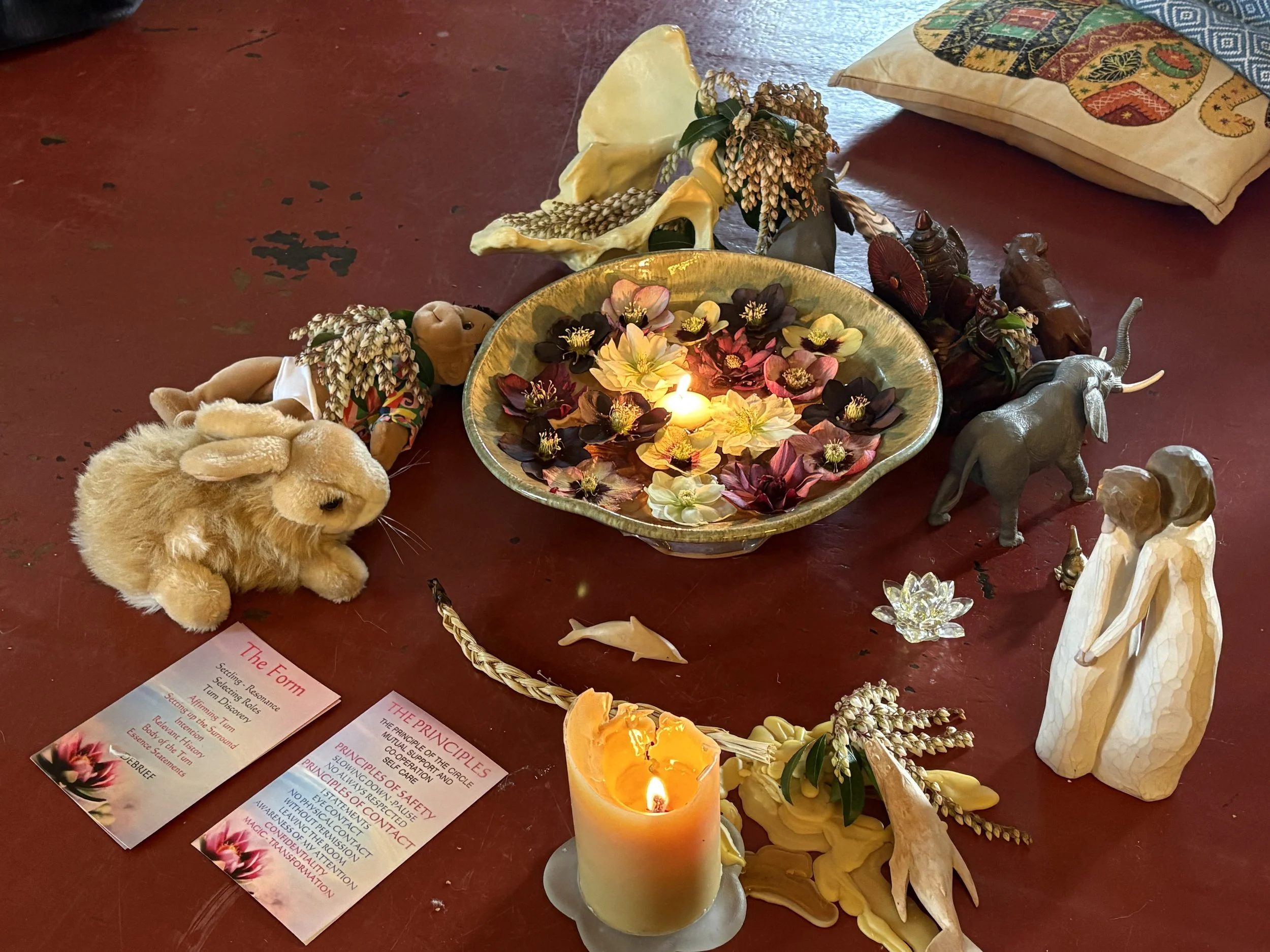
The Turn Process
The workshop centers on individual "turns"—dedicated time for one person to explore their early imprints while held by the group.
Each turn typically lasts 45 minutes to a few hours, paced by what the person's nervous system can integrate.
The Stages of a Turn
A journey held in relationship
Turn Selection
Who feels called to take a turn.
Affirming the Person's Turn
The group explicitly welcomes them.
Preparing the Surround
Arranging physical and relational support.
Orienting to Intention
Sharing what's being brought to explore.
Body of the Turn
Following sensations, impulses, and movements; meeting contractions and expansions; discovering what was needed but not received; finding completion.
Integration
Consciously supporting the nervous system to settle and reorganize.
Essence Statements
Witnesses share their own experience using "I" statements to orient to and differentiate their own material.
Follow-Through
Ongoing support as integration continues.
Why Birth Creates Such Lasting Imprints
Birth is one of our first major rites of passage, and how we navigate this journey becomes a template within our nervous system that influences how we move through life's transitions. Birth can create deep imprints because:
It occurs during a period of critical neurological development.
Early experiences can shape developing regulatory systems.
Experiences are held as preverbal, implicit memory in the body and nervous system these experiences shape our unconscious responses. ('this is what my body learned about transition, pressure, effort, contact, separation/connection, and being supported’)
Early patterns can become blueprints for how we move through challenges, ask for help, navigate being stuck, trust our timing, and relate to support.
It involves survival at the most literal level.
It is one of our earliest experiences of agency, or lack thereof.
It is our first major relational experience outside the womb.
Experience-dependent neuroplasticity is one reason early experiences can have disproportionate developmental significance.
Birth is a massive sensory, autonomic, and relational transition. profound state transition
The way birth transition unfolds is a contributing factor in how regulation and relationship become organized in the nervous system of the newborn.
the prenatal environment and the experience of birth become part of the earliest template through which the nervous system learns how to orient, regulate, respond to sensation, and meet pressure, move towards connection, and transition from one state to another. These experiences help establish an early template within the developing nervous system, a foundation from which later patterns of regulation, relationship and engagement with the world unfold.
Your intention doesn't need to be specifically about birth. You may come with questions about relationships, creativity, feeling stuck, or a pattern you're experiencing in your life now. The birth experience may reveal itself naturally as part of your developmental story—the soil in which later patterns grew.
The body knows what it needs to show and when.

What We Learn and Discover
This work is about growing consciousness and agency within the field of our earliest patterns. Through safety, attunement, resonance, and supportive relationship, we build both inner and relational resources—discovering capacities for choice, voice, boundary, and connection that weren’t available during our original experiences.
Rather than being unconsciously driven by survival strategies formed before we had words, we learn to:
Metabolize or differentiate from what was overwhelming
Complete what was interrupted
Discover we have choices where we once had none
Differentiate from the unresolved material of our family of origin
Build inner resources to meet life with more presence and possibility
Mature and develop our nervous system by healing in relationship—recognizing that wounds created in relationship must be healed in relationship
We may touch the thread of our essential nature, what we at The Human Development Center call our Original Health, the blueprint of wholeness present before survival patterns formed.
Words from participants…
-
Wow… just wow.
It’s difficult to find words that fully express the depth of my experience with Clara and Hiraman during a recent Womb Surround. My partner and I participated together, and it has had a truly life-changing impact on our family.It was one of the most profound healing experiences of my life. I found myself asking why it touched me so deeply — and the answer arose from a knowing deep within:
The deepest struggles I’ve faced in life have roots in my preconception, conception, and birth experiences. This work was the way to integrate a really big piece around that for me.To spend multiple days in intentional community — co-regulating with others, each person bringing curiosity and presence to these early, vulnerable layers of our lives — created a field of safety I’ve rarely felt. And within that field, the facilitation of Clara and Hiraman became the catalyst for true transformation.
Their mastery is not just in their skill, but in their devotion — to each other, to the sacredness of relationship, and to their calling to support others. Their love is palpable. It felt like being lovingly held by the mother and father energy I didn’t receive at the beginning of life. My biology responded instantly. Every part of me soaked in the nourishment.
My wise adult self could allow my younger self to feel what is natural and right as they offered it. It felt like reparenting from the inside while being supported from the outside. The people in the space also added such deep presence and insights that were incredibly attuned. Collective ingredients that I know were always needed in that way but now experienced. What a gift. I feel more grounded and whole. Since then my partner has been in tears thanking me for how I am able to meet her emotionally on a whole new level.
This work is not just powerful — it’s essential. My prayer is that more people find their way to this field. I am not exaggerating when I say it was the equivalent of 30 deep somatic sessions in one. If you are on the fence. Jump. Don't let another year go by where you do not feel fully held. Let Clara, Hiraman, and the collective field catch you so you can land into a more mature version of yourself so life can be lived with more belonging and depth.
With deep gratitude,
Mike Elliott
The Approach
Understanding Pre and Perinatal Somatic Psychology
Pre- and Perinatal Somatic Psychology is a holistic, body-centered approach to understanding how our earliest experiences, from pre-conception and life in the womb through birth and the first months of life, shape the developing nervous system, emotional patterns, capacity for relationship, and the ways we move through the world.
This integrative field brings together insights from developmental neuroscience, embryology, interpersonal neurobiology, attachment theory, early trauma research, and somatic psychology to understand how these foundational experiences influence health, resilience, and human development throughout the lifespan.
In our workshops here at the HDC, we are nervous system focused therapists holding this in a spiritually grounded way informed by over 20 years of education in the PPN Psychology field. With the psychological aspects of this work we are centered as educators and empathetic adults not offering mental health guidance. We have a rich and established referral network of professionals who we may be working in tandem with depending on participants unique history and needs.
Implicit Somatic Memory
Early experiences are stored as body-based memory in the nervous system, influencing stress response, regulation, and relationships.
Key Fundamentals of the Field
Embodied Relational Healing
Healing occurs through body-based and relational practices that allow early imprints to transform.
Developmental Continuity
Psychological and physiological patterns emerge before birth, shaping attachment and limbic imprinting.
Attachment and Early Bonding
Bonding begins before birth and remains foundational throughout life.
The Eight Guiding Principles
Welcome
We welcome you as a unique conscious being, all parts of you including any physical strengths and limitations, the entire spectrum of your emotions and thoughts. To be welcomed and received for who we are is a conception right, a birthright, and a primary developmental need.
Mutual Support
We support each other to come into connection in a way that mutually respects and encourages everyone's wellbeing. This is non-competitive and win-win, not cooperation at the expense of self.
Choice
You can move at a pace that allows you to track your experience and know if the direction feels right. You have space to say yes, no, or maybe. "No" is always welcome and honored—it is actually a repair for times you may have been forced to do something without choice.
Co-Regulation
We support each person to take the time they need to integrate their experience moment by moment and stay regulated. When you feel activated or notice yourself moving out of regulation, you can take a pause. When someone pauses, all processing stops until that person's pause is complete.
Self-Care
Please eat, rest, hydrate, eliminate—whatever you need to support yourself. Self-care supports not just you but the entire group. Taking care of yourself is a contribution to the whole.
Eye Contact
We practice making brief, frequent eye contact (about every couple of minutes) with the intention of mutual support and cooperation. Without this gentle checking in, distance can grow and we may begin making up stories about others based on our own history.
Touch & Attention
When touch is offered, it comes with mindfulness and pacing. Every step of the way, the person receiving touch has choice. We also practice differentiating touch from attention—recognizing that all beings are as responsive to what we do with our attention as to physical contact.
Confidentiality
We can speak freely about our own experience, but we hold sacred each other's stories. We ask for permission before sharing another person's story outside this circle.
Ancient Roots
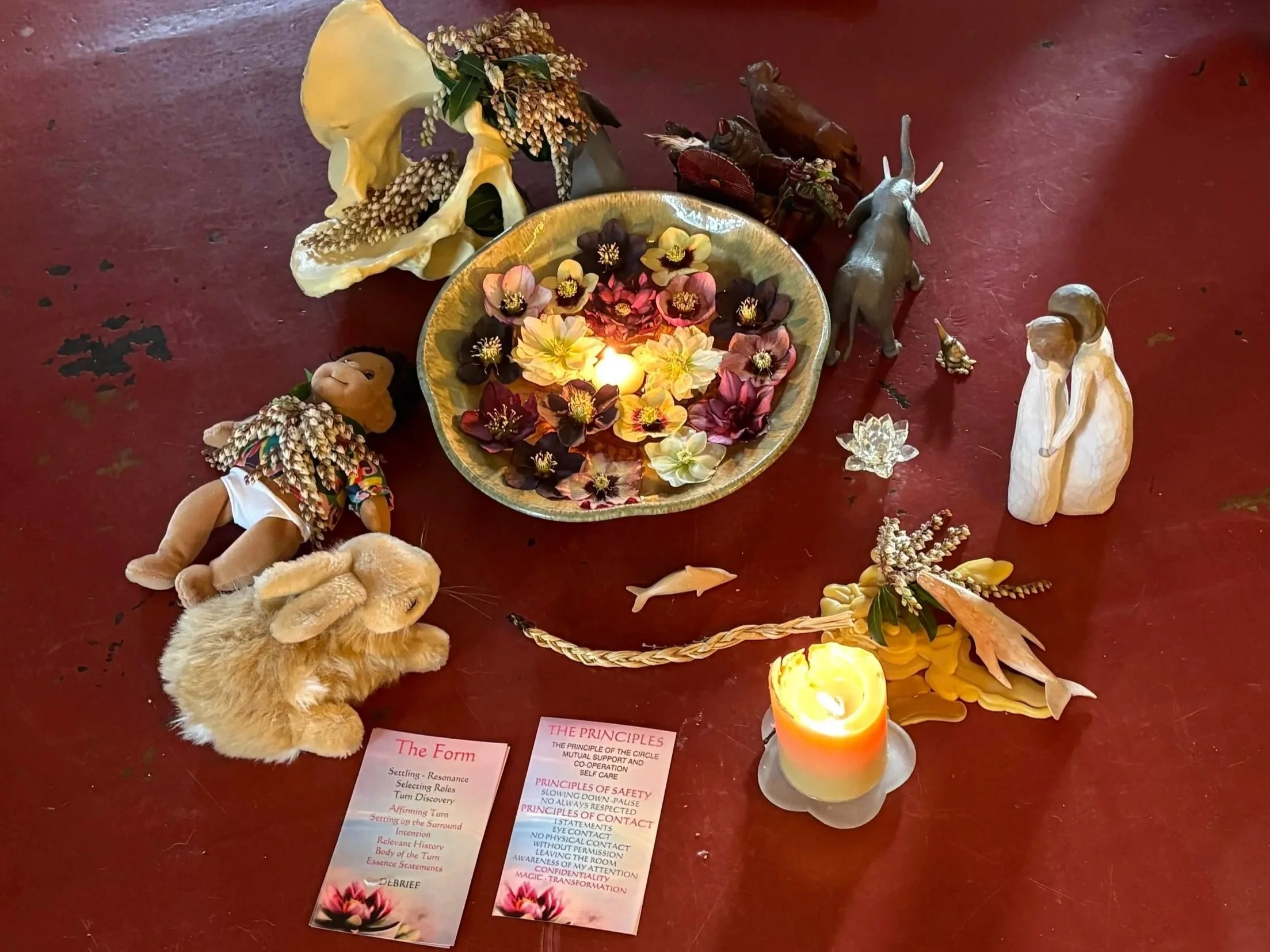
While the formal academic field of Pre and Perinatal Somatic Psychology is relatively recent, the heart of this work is ancient. Throughout human history, across all cultures and traditions, mothers and fathers, families and cultures have welcomed and nurtured consciousness in embodied, heart-centered ways, attuning to the baby in the womb, honoring the sacredness of birth, holding newborns with reverence and care.
This intuitive, relational wisdom of parents throughout time is also part of the developmental field of this work. The modern field of Pre and Perinatal Somatic Psychology both honors and studies what attuned and regulated caregivers have always known: that we arrive as conscious beings, that our earliest experiences matter profoundly, and that we thrive when met with primal safety and loving presence from the very beginning.
Historical Foundations
Although the field of pre and perinatal psychology has emerged only in recent decades, the heart of this work is timeless. It grows from the enduring wisdom of parents, families, and communities who have long understood that the earliest experiences of life matter.
Early 20th Century
Otto Rank proposed that birth itself is a profound psychological event with lasting emotional effects. He suggested that the experience of leaving the safety and unity of the womb and entering the world marks our first major transition, influencing our sense of separation, relationship, and adaptation throughout life. Rank's pioneering work invited psychology to consider birth not merely as a biological event, but as a meaningful experience that can shape emotional development and the ways we meet challenge, change, and connection.

Mid-Century Development
Building on these early insights, D. W. Winnicott, William Emerson, David Chamberlain, Thomas Verny, and many others helped establish the field of pre- and perinatal psychology. Through their clinical work and research, they demonstrated that experiences before conception, during pregnancy, throughout birth, and in the earliest stages of life can profoundly influence emotional development, attachment, nervous system regulation, and lifelong patterns of relationship and wellbeing.
Somatic Integration
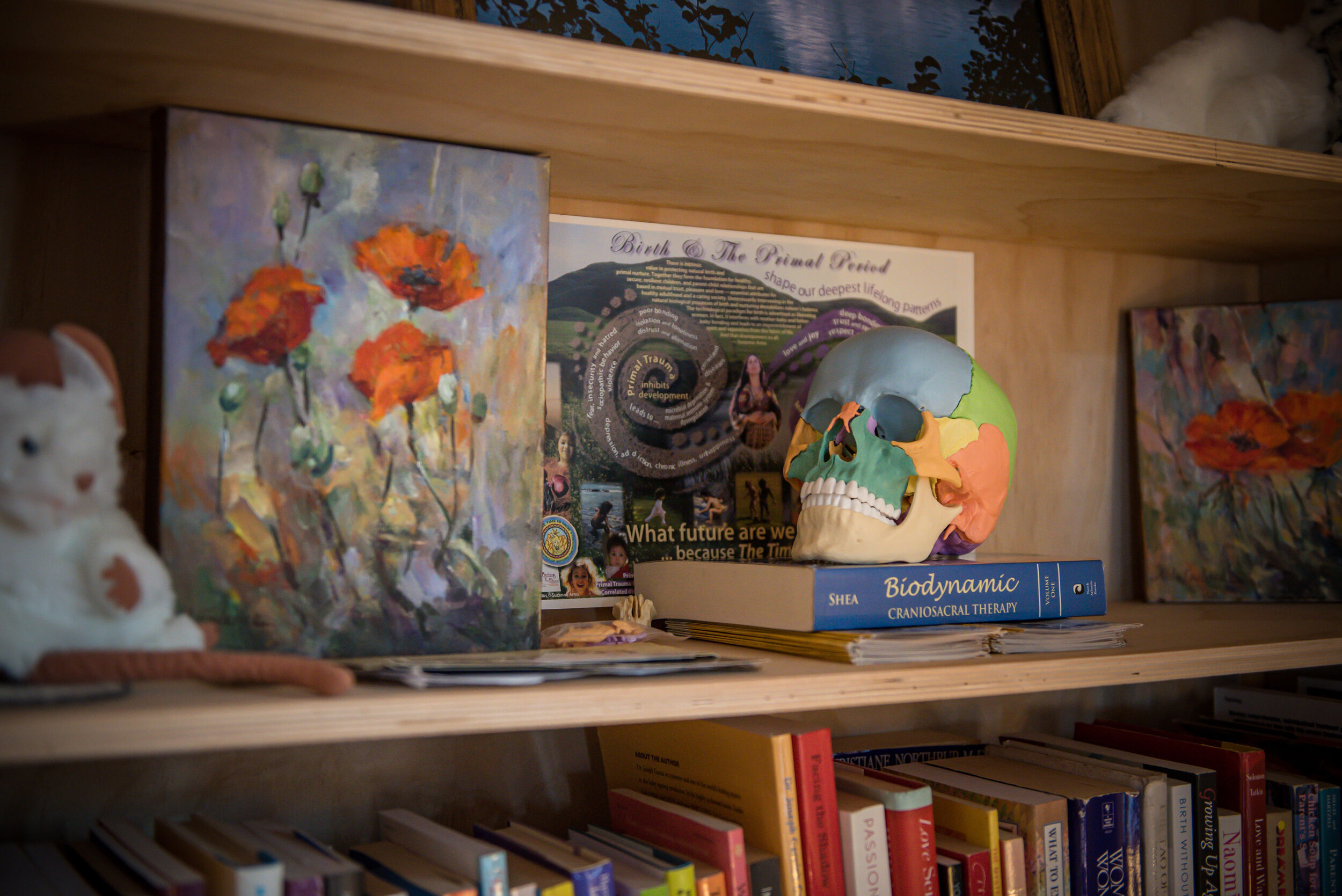
Together, the pioneering work of Wilhelm Reich, Franklyn Sills, Frank Lake, Stanislav Grof, Ray Castellino, Myrna Martin, and many others helped shape the embodied approaches that continue to inform pre- and perinatal psychology today. Their collective contributions affirmed that our earliest experiences are held not only in memory, but also within the body, the nervous system, and our relational patterns. and within our consciousness. This growing understanding has laid the foundation for contemporary approaches such as Womb Surrounds, which offer opportunities to revisit these early experiences within a safe, attuned, and supportive relational field, allowing healing and new possibilities to emerge.

Formal Organization
The Association for Prenatal and Perinatal Psychology and Health (APPPAH) was founded in 1983 to advance research, education, and clinical practice in the emerging field of pre- and perinatal psychology. Since its founding, APPPAH has brought together practitioners, researchers, educators, and parents from around the world to deepen our understanding of how our earliest experiences influence health, development, relationships, and wellbeing throughout the lifespan.
The Invitation
This is slow work.
Healing cannot be rushed. It unfolds through relationship, attunement, and the steady restoration of the conditions in which life naturally thrives.
Layer by layer, we remember our original blueprint for connection, resilience, and wholeness.
“The slower we go the faster we get there” Myrna
Ways to Engage
There are a few ways to find your way into a Womb Surround:
Join an upcoming group. Reach out to be placed in one of our scheduled Womb Surround Process workshops. Keep an eye on our Events page and newsletter for openings — spaces are limited, since these workshops are held in small, intimate groups to hold the depth of the work well.
Bring your own group. If you already have a full or partial group — friends, family, or community members — who'd like to explore a Womb Surround together, reach out to us directly. We can facilitate for your group either here in Bellingham or, in many cases, travel to you.
Host us for a Womb Surround in your area. We travel often to facilitate, frequently landing in participants' own homes to hold the container for their community. If you're interested in hosting a Womb Surround with your family or community members, we offer a partial discount on facilitation costs in exchange for hosting us and the workshop space.
Investment
A Womb Surround is an immersive experience, held over either 2½ or 5 full days, with ample time for embodied exploration, relationship, rest, and integration. The small group setting allows us to create a deeply supported space for each participant.
The investment is $1,500 per person for either format.
If you are able and willing to contribute more, we welcome and encourage that. Additional contributions help make it possible for others to participate who may not otherwise have access to this work.
If $1,500 is beyond what you can comfortably afford, please reach out to us. We believe in access to this work and are committed to exploring options with you.
Intake Form
Our Womb Surround Intake Form can be downloaded by clicking the button below.
Please take your time completing the form, answering each question as thoughtfully and thoroughly as you are able.
Once you've finished, please email the completed form to humandevelopmentcenter1008@gmail.com.
We will review your intake and respond within five business days to discuss next steps and answer any questions you may have.