
Pre & Perinatal Somatic Personal Growth & Professional Development Course
13 Seminars | Each Seminar: 5 Days 9:30am-5:30pm
Embodying our true selves while nestled in community
Stay Updated on Training Details
Sign up for our newsletter to receive relevant training updates from Human Development Center.
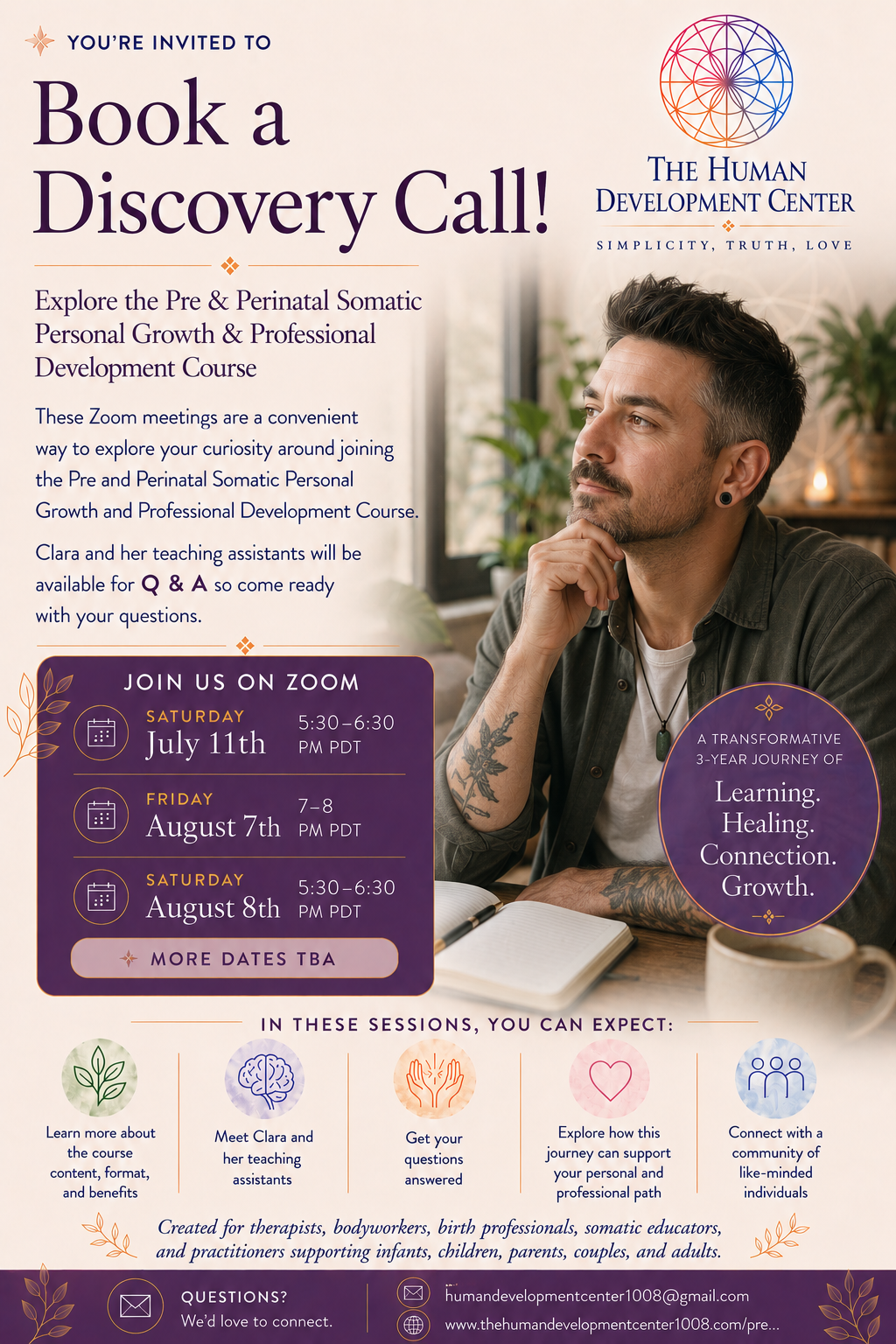
Book a call using the form below
Overall Scope & Purpose
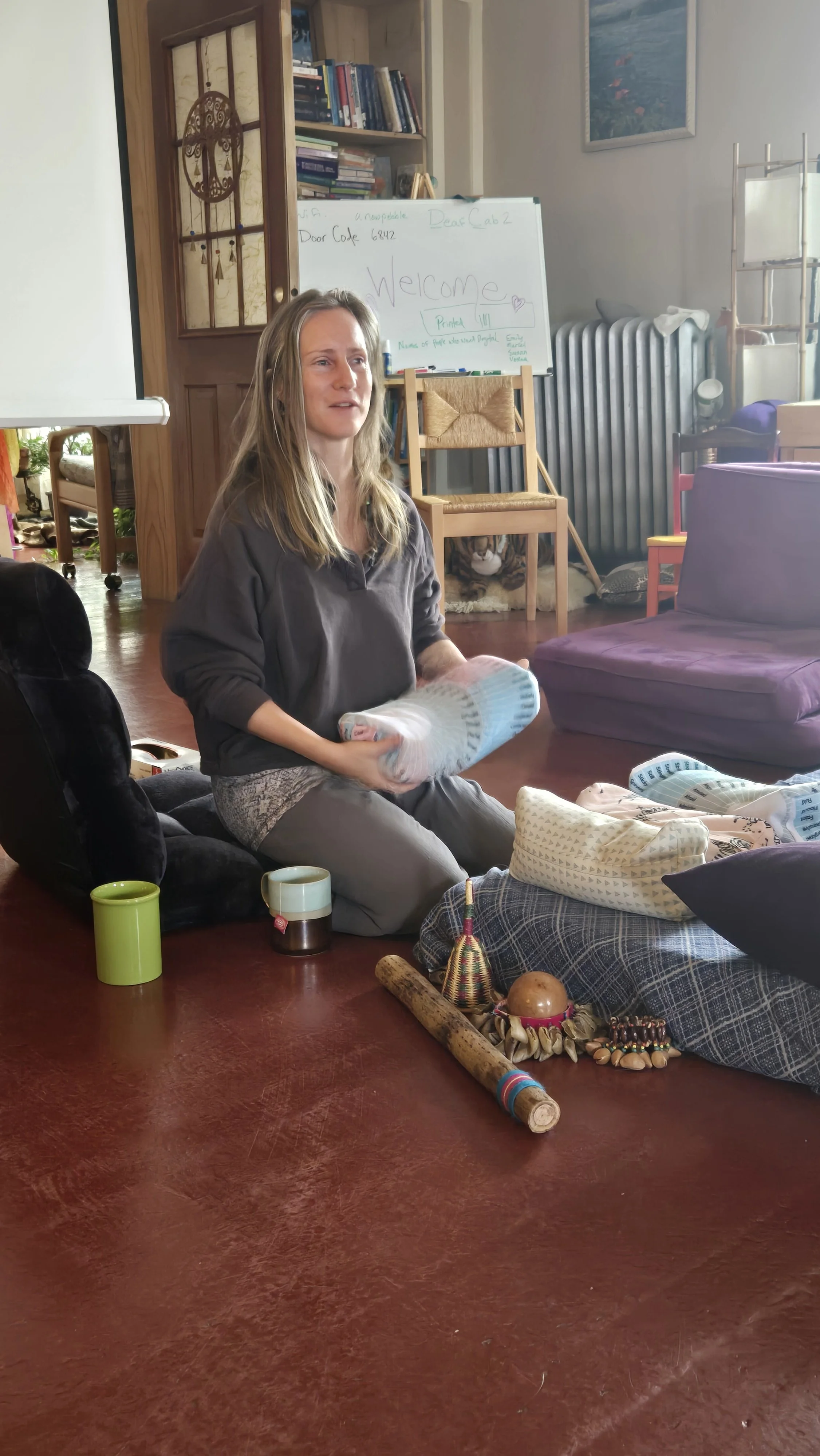
This professional training is designed for mental health therapists, craniosacral therapists, occupational and physical therapists, bodyworkers, birth professionals (midwives, doulas), somatic educators, and others working with infants, children, parents, couples, or adults. It offers an in-depth exploration of the earliest foundations of human development and how early experiences shape nervous-system regulation, attachment, identity, health, and relational patterns across the lifespan.
Drawing on pre- and perinatal psychology, interpersonal neurobiology, attachment theory, somatic therapy, developmental neuroscience, embryology, and the lineage of pioneers such as Myrna Martin and Kate White, the training supports practitioners in understanding and gently healing preconception, prenatal, birth, newborn, and early childhood imprints.
Participants gain:
* Support for building secure self-attachment and relational safety
* Skills to identify and work with early trauma, birth-related imprinting, and ancestral patterns
* Embodied, somatic approaches integrating nervous-system regulation, bodywork, and emotional processing
* Tools to support parents, infants, families, couples, and adults toward healthier development and long-term well-being
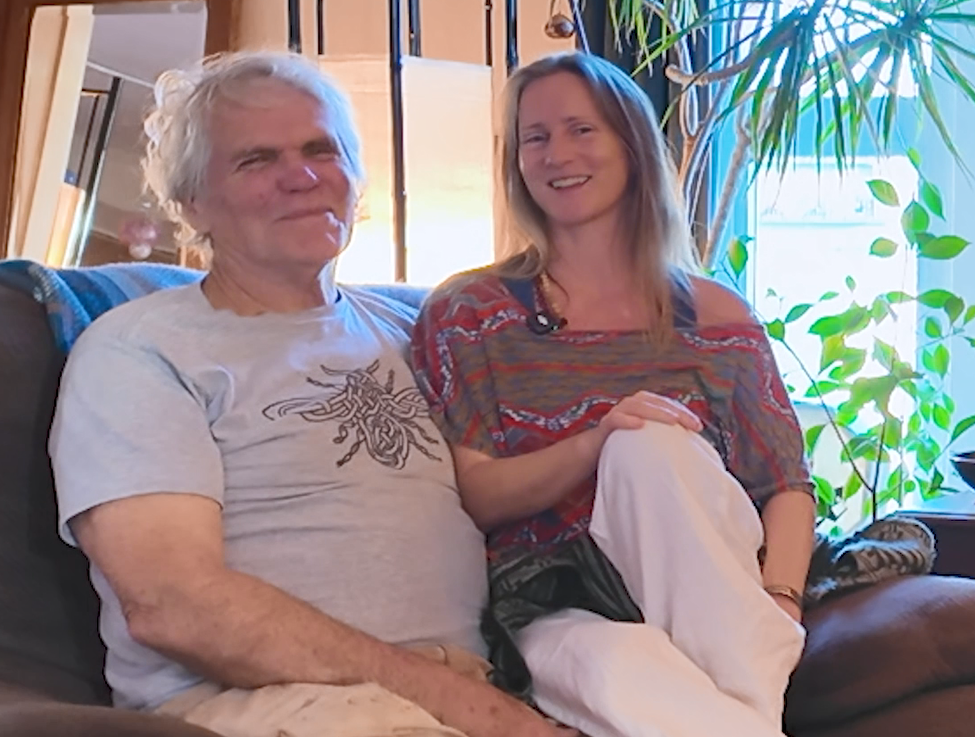
Learn more from the video below with Clara and Hiraman speaking about the training with a few of the teaching assistants.
Full Training Schedule (2027–2030)
| Seminar | Dates | Topic / Theme |
|---|---|---|
| Seminar 1 | January 13-17, 2027 | Foundations of Pre & Perinatal Awareness, Safety & Attachment |
| Seminar 2 | May 5-9, 2027 | Pre-Conception, Conception & Early Embryonic Potency and Imprinting |
| Seminar 3 | September 22-26, 2027 | The Vaginal Birth Journey — A Baby’s Perspective |
| Seminar 4 | December 1-5, 2027 | Medical, Chemical & Surgical Birth Interventions |
| Seminar 5 | February 23-27, 2028 | Life, Loss, Death & Ancestral / Double-Bind Imprinting |
| Seminar 6 | May 10-14, 2028 | Couples & Attachment Perspectives |
| Seminar 7 | September 20-24, 2028 | Infants and Their Families — Applied Hands-On Pre & Perinatal Skills |
| Seminar 8 | November 15-19, 2028 | Preschoolers and Family Sessions — Therapeutic Play |
| Seminar 9 | January 24-28, 2029 | Prenatal Loss, Artificial Reproductive Technologies & Twin Loss Dynamics |
| Seminar 10 | April 25-29, 2029 | Prematurity, NICU Experiences & Early Medical Trauma |
| Advanced Training | ||
| Seminar 11 | September 19-23, 2029 | Adoption, Foster Care, Surrogacy & Non-Birth Parent Attachment |
| Seminar 12 | November 28- Dec 2, 2029 | Working with Adults — Healing Pre & Perinatal Imprints |
| Seminar 13 | January 23-27, 2030 | Integration, Clinical Case Review & Personal Birth Process Work |
Fees & Payment
The fee for the Pre and Perinatal Somatic Personal Growth and Professional Development Course is on a sliding scale of US$1200-$1600 per seminar.
The fee then for the full foundational training runs on a sliding scale of US$12,000-$16,000. The advanced training costs an additional US$3600-$4800.
$500 deposit due December 5.
Some scholarships available. Please contact us for more information on this.
This training offers a lot of guided support for each individual, with teacher’s assistants for every small group.
This creates a container rich with opportunity for learning, growth, and healing.
Detailed Curriculum Content
Seminar 1 – Foundations of Pre & Perinatal Awareness, Safety & Attachment
Overview:
This seminar establishes the theoretical and experiential foundations of pre- and perinatal work. Participants explore how attachment begins before birth and is shaped by the earliest relational and physiological conditions of life.
Core themes include:
Attachment development from preconception through the first two years of life
Interpersonal neurobiology and nervous-system co-regulation
Embryology, early imprinting, and the formation of self-regulation
Attachment styles, adaptive patterns, and relational compensation strategies
Somatic attunement, presence, grounding, boundaries, and differentiation
Seminar 2 – Pre-Conception, Conception & Early Embryonic Imprinting
Overview:
This seminar explores the earliest beginnings of human life and how physical, emotional, relational, and ancestral factors present at conception shape the emerging nervous system.
Core themes include:
Preconception influences: epigenetics, ancestral patterns, parental readiness
Conception as an experiential and relational event
The baby’s experience of being wanted, welcomed, or conflicted
Early differentiation within the parental system
Somatic skills for tracking subtle cues, titration, and early developmental rhythms
Seminar 3 – The Vaginal Birth Journey: A Baby’s Perspective
Overview:
Birth is explored as a lived, embodied experience for the baby, shaping physiology, movement, nervous-system organization, and early relational patterns.
Core themes include:
Stages and dynamics of vaginal birth
Cranial molding, movement patterns, and reflex development
Somatic and psychological meaning of the birth passage
Therapeutic approaches for healing challenging birth experiences
Personal birth exploration (with choice and safety)
Seminar 4 – Medical, Chemical & Surgical Birth Interventions
Overview:
This seminar examines how medical interventions influence early imprinting and how these experiences may echo across development.
Core themes include:
Effects of induction, anesthesia, analgesics, cesarean birth, forceps, vacuum extraction
Prenatal or early-life surgeries and medical procedures
Impacts on structure, energy, autonomic regulation, and attachment
Somatic and body-based approaches for integration and healing
Recognizing intervention patterns in later posture, behavior, and relationships
Seminar 5 – Ancestral Imprinting, Loss & Double Binds
Overview:
Participants explore complex imprinting related to ancestral trauma, prenatal loss, and conflicting relational messages.
Core themes include:
Twin embryology and twin-loss dynamics
Miscarriage, stillbirth, and prenatal loss
Transgenerational trauma and family lineage patterns
Double binds and unresolved survival conflicts and how to resource and work effectively with them
Practitioner Resonance, transference and countertransference skill development
Somatic and systemic approaches to ancestral healing
Seminar 6 – Couples, Relationships & Attachment
Overview:
This seminar applies pre- and perinatal understanding to adult relationships and parenting systems. Working with couples in a body centered emotionally focused way
to support couples to include dynamics of early attachment and the relevance of non-verbal communication in relational dynamics and repair processes.
Core themes include:
Early attachment imprints in adult relationships
Somatic approaches to couples work and co-regulation
Differentiation, boundaries, and relational safety
Supporting conscious conception, pregnancy, and parenting
Seminar 7 – Infants and Their Families: Applied Hands-On Skills
Overview:
Participants learn to work directly with infants and families using gentle, attuned, body-centered approaches.
Core themes include:
Nervous-system regulation and co-regulation
Craniosacral and gentle touch techniques
Supporting parent–infant bonding and attunement
Ethical and practical considerations when working with families
Seminar 8 – Preschoolers & Family Sessions: Therapeutic Play
Overview:
This seminar focuses on early childhood (ages 2–6) and family-based therapeutic approaches.
Core themes include:
Developmental needs of preschool-aged children
Therapeutic play, movement, and symbolic expression
Family-system dynamics and attachment repair
Supporting regulation, boundaries, and emotional expression
Sand Tray for preconception, conception and birth history
Seminar 9 – Prenatal Loss, ART & Twin-Loss Dynamics
Overview:
A deeper exploration of loss and complex beginnings, including assisted reproductive technologies.
Core themes include:
ART, IVF, donor conception, and surrogacy implications
Psychological and somatic impacts of early loss
Identity, belonging, and attachment dynamics/challenges
Therapeutic approaches for grief and integration
Seminar 10 – Prematurity, NICU & Early Medical Trauma
Overview:
This seminar addresses the unique needs of premature and medically vulnerable infants and their families.
Core themes include:
Impact of prematurity and NICU environments
Nervous-system pacing and trust-building
Supporting parental regulation and bonding
Long-term developmental and therapeutic considerations
Completion of Foundation Training
Advanced Training (Seminars 11–13)
Seminar 11 – Adoption, Foster Care & Non-Birth Parent Attachment
Overview:
Explores attachment and identity formation within adoption, foster care, and non-birth parenting contexts.
Core themes include:
Early separation and attachment wounds
Identity, belonging, and grief
Somatic approaches to bonding and integration
Supporting adoptive and foster families
Seminar 12 – Working with Adults: Healing Pre & Perinatal Imprints
Overview:
Participants learn to adapt pre- and perinatal approaches for adult clients.
Core themes include:
Recognizing early imprinting in adult bodies and relationships
Somatic processing, titration, and integration
Ethical considerations and relational containment
Seminar 13 – Integration, Case Review & Personal Birth Process Work
Overview:
The final seminar focuses on integration, supervision, and professional application.
Core themes include:
Case presentations and group supervision
Personal integration of early-life history
Creative home projects and reflective practice
Preparing for clinical and professional application
Alignment with the
Human Development Center Vision
This curriculum reflects a trauma-aware, body-centered, attachment-focused, and compassionate approach aligned with the Human Development Center’s mission. It supports individuals, families, and communities by addressing the roots of human experience and fostering resilience, coherence, and relational health across generations.
Express your interest, or ask a question.
To learn more about this program, or to express your interest, download the form below.
Once completed, please email the form to:
claracunningham1008@gmail.com
You may also use the form below to request a session or consultation.