
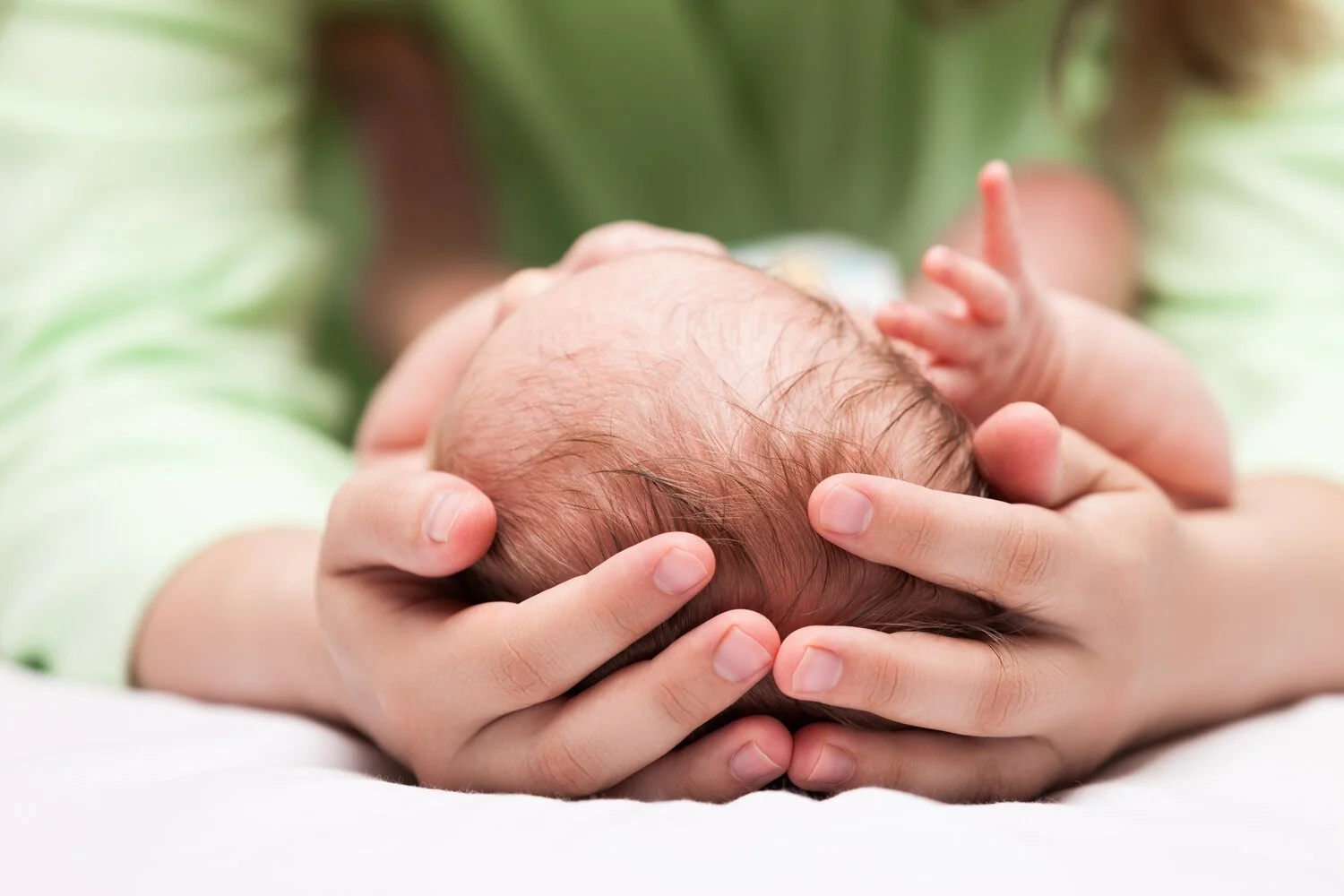
Craniosacral & Body-Centered Therapy for Infants and Newborns
A relational approach to nervous system integration, bonding, and early life wellbeing
An Orientation to Care & Engagement
The transition into life—through pregnancy, birth, and the early postpartum period—places profound demands on the nervous systems of infants and parents alike. Even when birth is medically “normal,” the body and nervous system may carry unprocessed sensory, physiological, and emotional experiences that can influence regulation, feeding, sleep, movement, bonding, and a sense of ease.
Families come to this work seeking gentle, attuned support for:
Decompressing and integrating the birth and perinatal experience
Supporting nervous system regulation for infants and parents
Deepening bonding and attachment
Supporting feeding, sleep, and settling challenges
Working through breastfeeding challenges using a nervous-system-informed, body-centered approach
Supporting infants experiencing colic, high reactivity, or difficulty settling
Addressing torticollis, asymmetries, and early mobility or movement challenges
Integrating early experiences at a bodily, emotional, and relational level
Supporting nervous system integration following early life interventions, including:
Tongue tie or oral tie assessments and procedures
Medical or surgical interventions in the neonatal period
NICU stays, hospitalizations, or early separations
Assisted or instrumented births
Procedures that required restraint, immobilization, or intensity
This work does not replace medical or lactation care. Instead, it offers a complementary, body-centered approach that supports the nervous system in processing, settling, and reorganizing following early challenges or necessary interventions—often creating more capacity for ease, coordination, and connection for both babies and parents.
Families are met where they are, without rushing, fixing, or pathologizing, honoring the innate intelligence of the body and the relational field that supports integration.
Ways to Engage in This Work
Families may engage in support in several ways, depending on their needs:
Craniosacral Therapy for Infants & Newborns
Gentle, hands-on nervous system support that listens to the baby’s rhythms, cues, and capacity for integration.
Parent-Focused Sessions (without the baby present)
Body-centered support for parents to process their own pregnancy, birth, or postpartum experiences—directly supporting the infant’s nervous system through the caregiving relationship.
Birth Decompression & Integration Support
Support for infants and parents to process and integrate birth experiences—whether medically complex, fast, prolonged, or emotionally intense.
Integrated Postpartum Care
Additional emotional, physical, and relational postpartum offerings are available through the Integrated Family Collective (see postpartum care page for details).
Parent–Infant Nervous System Support
Sessions that include parents as co-regulators, supporting emotional regulation, bonding, feeding, and relational confidence.
My Approach to Working with Infants & Families
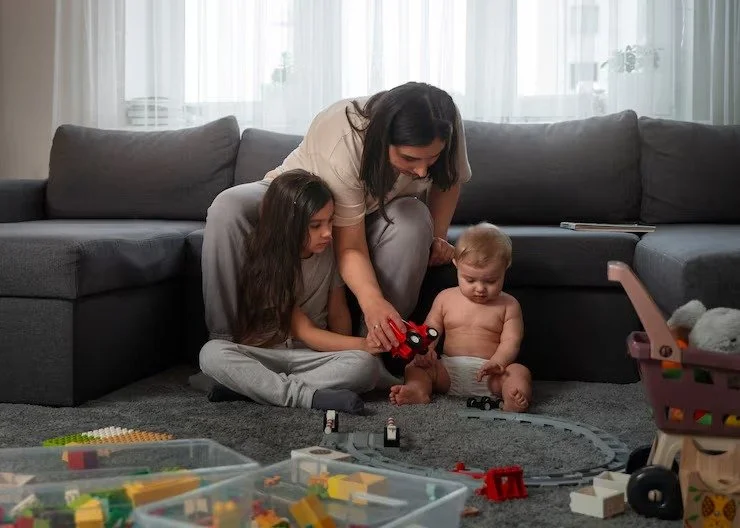
My work is grounded in Biodynamic Craniosacral Therapy, developmental neuroscience, attachment theory, and relational body-centered therapies. At its core, this is a listening-based approach—one that trusts the body’s inherent capacity for organization and healing when met with safety, presence, and respect.
Rather than relying solely on techniques or protocols, I orient to:
The midline as a foundation for orientation, organization, and embodied presence
The palate and oral system as sensory and relational gateways connected to feeding, regulation, and early bonding
The infant’s autonomic nervous system, tracking cues of activation, settling, and integration
The relational field, recognizing that infants regulate through relationship, not isolation
Touch is always gentle, non-invasive, and responsive. The pace is led by the infant’s cues and capacity, with an emphasis on stillness, pauses, and allowing the body’s own timing.
Relationally Focused & Attachment-Centered Care
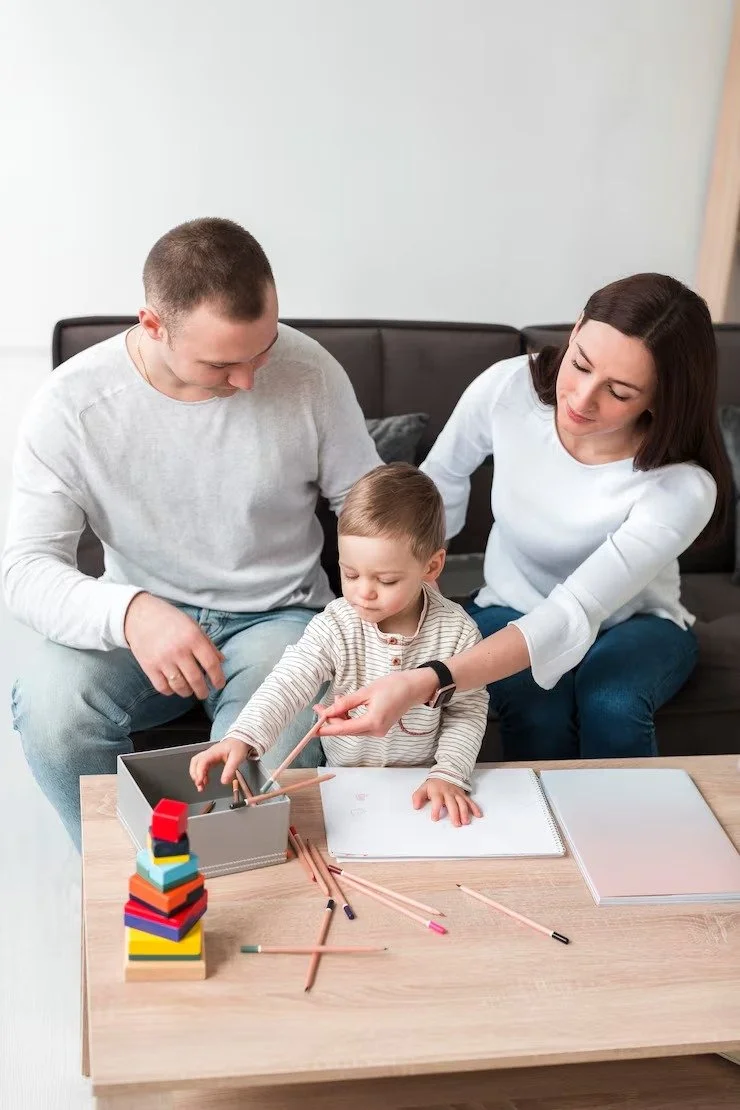
Infants do not experience regulation or integration alone—they experience it through relationship. Parents and caregivers are central to this work, not observers.
Sessions may include:
Supporting parents in reading and responding to their baby’s cues
Strengthening parental regulation and confidence
Supporting feeding relationships without pressure or force
Creating space for emotional presence while preventing overwhelm
Honoring the bond as the primary organizer of the infant’s nervous system
When parents feel supported, regulated, and understood, infants naturally experience greater safety and ease.
Birth Integration & Early Nervous System Support
At birth, an infant’s nervous system is still forming its foundational patterns of regulation, safety, and connection. While sensory and survival systems are active, the newborn’s limbic system—the emotional and relational center of the brain—is highly sensitive and shaped through experience rather than fully formed at birth. Early interactions, sensations, and relational states are rapidly encoded as implicit memory, laying the groundwork for how the infant experiences comfort, stress, connection, and trust.
Birth itself is a powerful sensory and emotional event. Whether smooth or complex, fast or prolonged, or medicalized, the newborn’s body and nervous system register these experiences through sensation, movement, emotional tone, and relationship. When experiences are overwhelming, interrupted, or require early interventions, the nervous system may hold incomplete patterns that continue seeking resolution.
Because infants do not yet regulate independently, emotional and physiological organization occurs through co-regulation. The infant’s limbic system is shaped in relationship—through presence, attunement, tone of voice, touch, and the emotional availability of caregivers. This is why the work is inherently relational and emotionally focused: regulation and integration happen through felt safety, not cognition.
Through gentle craniosacral and body-centered support, this work offers the nervous system an opportunity to slow down, sense, and complete what could not fully integrate at the time of birth or early life.
Birth is both a physiological and perceptual experience. When aspects of that experience remain unintegrated, they may show up as tension, startle responses, feeding challenges, asymmetry, digestive distress, or difficulty settling.
Through gentle craniosacral and body-centered support, this work helps:
Complete interrupted or overwhelming experiences
Support sensory and autonomic regulation
Encourage natural developmental organization
Foster coherence, comfort, and connection in the body
Integration often emerges through subtle but meaningful shifts—changes in breath, tone, movement, orientation, or relational ease.
Philosophy of Care

This work is guided by the principles of:
Simplicity — less intervention, more listening
Respect — honoring the innate wisdom of infants and families
Relationship — healing unfolds in connection
Presence — regulated nervous systems matter
Developmental Timing — trusting the body’s pacing
There is no agenda to fix or correct. The intention is to support the conditions in which regulation, connection, and integration naturally arise.
Request a Session / Intake Form
Please download and complete the Infant & Newborn Craniosacral Therapy Intake Form below.
You are welcome to fill it out over time or together during your session.
Once completed, please email the form to:
claracunningham1008@gmail.com
You may also use the form below to request a session or consultation.